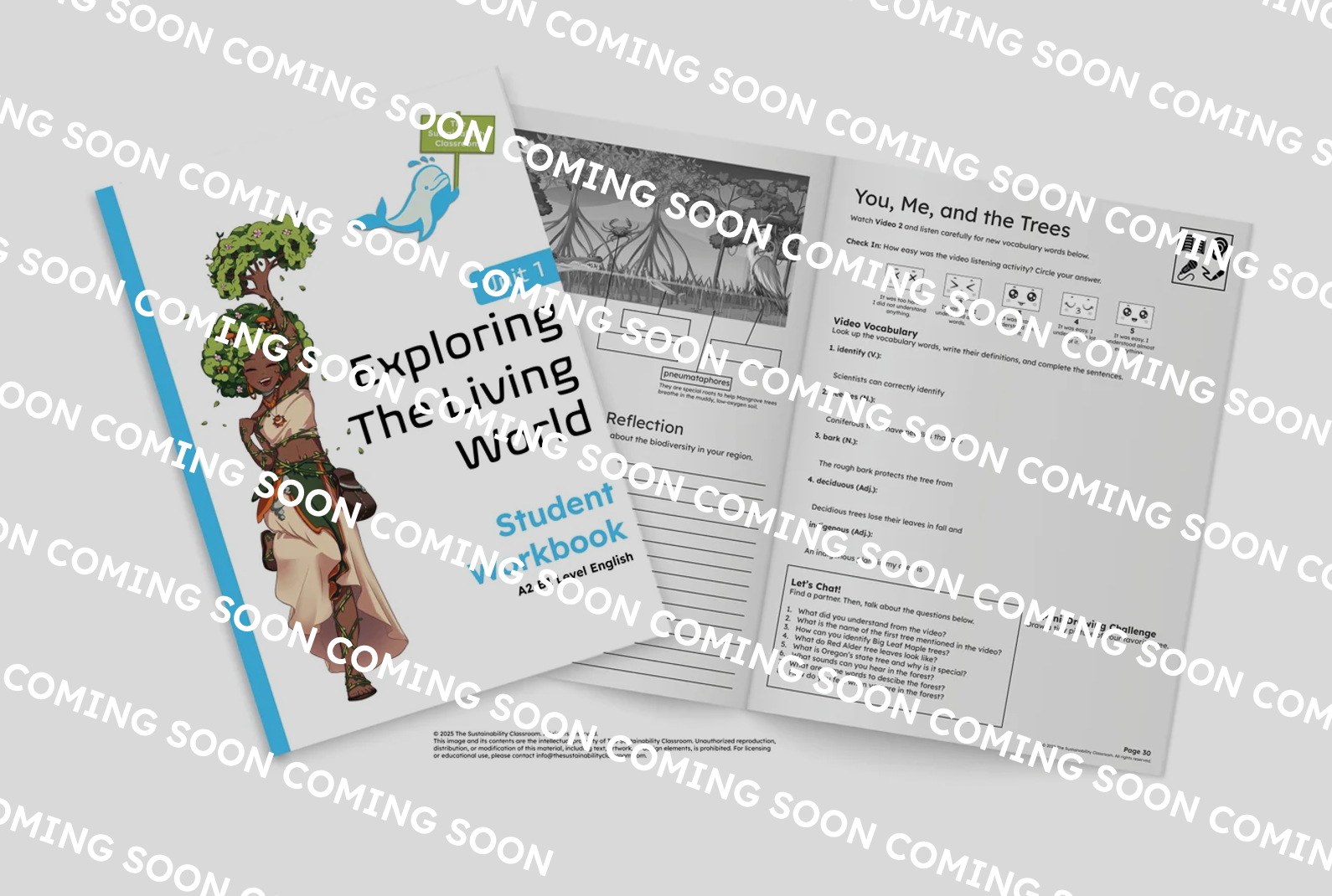
COMING SOON! Unit 1, Exploring The Living World Student Workbook
Categories: THE LIVING WORLD
COMING SOON! Unit 1, Exploring The Living World Student Workbook
Description
Exploring The Living World – Student Workbook (A2–B1 Level English)
Explore the connections that shape our living world.
This Student Workbook invites learners to dive into the wonders of biodiversity, ecosystems, and the relationships that connect all living things. Created for A2–B1 English learners, this resource combines environmental science with purposeful English language learning, following a CLIL/CBI methodology. Students will strengthen reading, writing, listening, and speaking skills through engaging, real-world content.
In this unit, Flora, the Global Guardian of The Living World, encourages curiosity, empathy, and environmental responsibility. Students will explore how people, animals, and plants depend on one another, learn to describe nature using new vocabulary, and reflect on their role in protecting the planet.
Designed for both classroom and independent learning, this workbook features:
-
Video-based comprehension activities that build listening comprehension and critical thinking skills
-
Vocabulary and reflection tasks that connect language learning to sustainability concepts
-
Creative writing that encourages self-expression and environmental awareness
-
Discussion questions that develop communication skills and personal responsibility to sustainability
-
Student self-assessment tools for reflection and confidence building
- Project-based learning with the end-of-the-unit research project and creative presentation
Aligned with the UN sustainability education goals, USPESD sustainability standards, CEFR language learning standards, and CASEL standards, Unit 1: Exploring The Living World helps students see nature as an interconnected system while improving their English in meaningful, motivating ways.
Digital Download
Please note that this option is a digital download only—no physical items will be shipped. We recommend creating an account at checkout so you can easily access your workbook anytime and receive future updates.
Tips for Your Digital Workbook
-
Open your PDF in an app such as GoodNotes, Notability, or Noteshelf to write directly on the pages with a stylus or keyboard. These tools let you type, highlight, and handwrite using a digital pencil or stylus. Once imported, your workbook functions like a digital journal you can fill in easily.
-
If you’re using a laptop or desktop, you can type directly into the workbook by opening the PDF in Adobe Acrobat Reader (free) or any compatible PDF viewer. Some learners also prefer keeping a separate Word or Google Doc open to copy the prompts and write longer reflections or notes.
Print Version
For a print version of this workbook, visit our Amazon shop to order your copy today.
Student Learning Objectives (SLOs):
In Unit 1: The Living World, students will learn how living and nonliving things work together to create balanced ecosystems. They’ll investigate the roles of plants, animals, and humans within the web of life, discovering how small changes can affect entire systems. Through guided exploration, students will:
Identify the characteristics and needs of living organisms.
Explain the importance of biodiversity and interdependence.
Analyze how environmental changes impact ecosystems and species survival.
Develop observation and critical-thinking skills through inquiry-based activities.
Reflect on personal actions that help protect and support the living world.
What's Included?
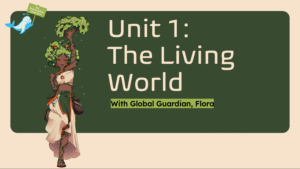 Unit 1 Powerpoint
Lessons Overview:
Exploring the meaning and importance of living within environmental, social, and economic balance.
Understanding how interconnected systems support sustainable communities.
Examining how cause and effect shape global and local sustainability challenges.
Recognizing equity, culture, and inclusion as essential to sustainable solutions.
Investigating how everyday actions impact natural resources, waste, and climate.
Encouraging creative, critical, and collaborative thinking for real-world change.
Integrating sustainability themes across subjects and designing meaningful student projects.
Building student agency, reflection, and leadership for a sustainable future.