“Unit 1 Content Bundle” has been added to your cart. View cart
Unit 1 Content Bundle

Categories: THE LIVING WORLD
Unit 1 Content Bundle
Description
Explore the connections that bring our planet to life.
Discover the wonders of Earth’s living systems with Unit 1: The Living World, a ready-to-teach sustainability unit designed to help students understand how all forms of life depend on one another. This comprehensive downloadable resource includes a Teacher Guide, Student Worksheets, a PowerPoint presentation, and extension activities that make complex ecological concepts engaging and accessible for any classroom.
Through hands-on learning, students will explore biodiversity, ecosystems, and the delicate balance between humans and nature. Teachers will find easy-to-follow lesson plans, reflection prompts, and adaptable materials that support inquiry, collaboration, and systems thinking across subjects.
Perfect for upper elementary or middle school learners, this unit aligns with sustainability and science education standards while fostering curiosity, respect, and environmental responsibility.
Student Learning Objectives (SLOs):
In Unit 1: The Living World, students will learn how living and nonliving things work together to create balanced ecosystems. They’ll investigate the roles of plants, animals, and humans within the web of life, discovering how small changes can affect entire systems. Through guided exploration, students will:
Identify the characteristics and needs of living organisms.
Explain the importance of biodiversity and interdependence.
Analyze how environmental changes impact ecosystems and species survival.
Develop observation and critical-thinking skills through inquiry-based activities.
Reflect on personal actions that help protect and support the living world.
What's Included?
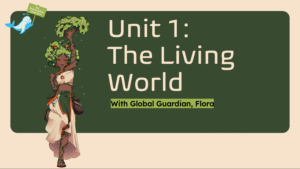 Unit 1 Powerpoint
Lessons Overview:
Exploring the meaning and importance of living within environmental, social, and economic balance.
Understanding how interconnected systems support sustainable communities.
Examining how cause and effect shape global and local sustainability challenges.
Recognizing equity, culture, and inclusion as essential to sustainable solutions.
Investigating how everyday actions impact natural resources, waste, and climate.
Encouraging creative, critical, and collaborative thinking for real-world change.
Integrating sustainability themes across subjects and designing meaningful student projects.
Building student agency, reflection, and leadership for a sustainable future.