Beta Testing: The Built World Unit
Categories: THE BUILT WORLD
Beta Testing: The Built World Unit
Description
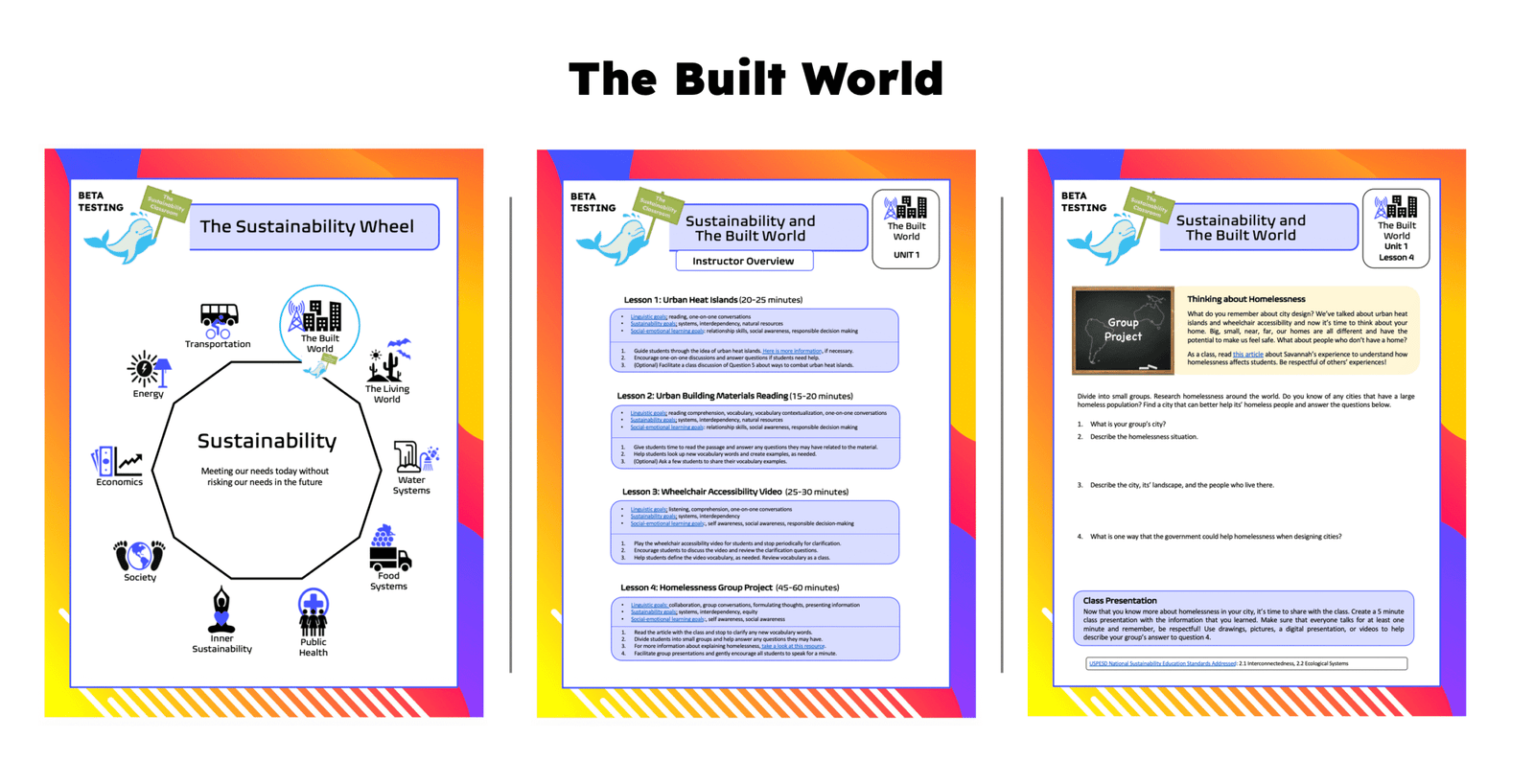
This CLIL Sustainability Unit, “Sustainability and The Built World,” provides a complete, ready-to-use resource for exploring how human-made environments impact people and the planet. The unit features four engaging lessons on urban heat islands, sustainable building materials, accessibility, and homelessness, helping students connect real-world issues to their own communities. It also includes a Sustainability Wheel graphic, along with a student pre-test and post-test to support assessment and track progress.
Designed for interactive, student-centered learning, this unit builds reading, discussion, and critical thinking skills while promoting social awareness and responsible decision-making. Perfect for busy teachers looking for meaningful, cross-curricular materials, this unit is currently free as we continue developing new resources—download it now and bring sustainability to life in your classroom! If you try these activities with your students, we’d love to hear your feedback at info@thesustainabilityclassroom.com
Student Learning Objectives (SLOs):
In Unit 1: The Living World, students will learn how living and nonliving things work together to create balanced ecosystems. They’ll investigate the roles of plants, animals, and humans within the web of life, discovering how small changes can affect entire systems. Through guided exploration, students will:
Identify the characteristics and needs of living organisms.
Explain the importance of biodiversity and interdependence.
Analyze how environmental changes impact ecosystems and species survival.
Develop observation and critical-thinking skills through inquiry-based activities.
Reflect on personal actions that help protect and support the living world.
What's Included?
 Unit 1 Powerpoint
Lessons Overview:
Exploring the meaning and importance of living within environmental, social, and economic balance.
Understanding how interconnected systems support sustainable communities.
Examining how cause and effect shape global and local sustainability challenges.
Recognizing equity, culture, and inclusion as essential to sustainable solutions.
Investigating how everyday actions impact natural resources, waste, and climate.
Encouraging creative, critical, and collaborative thinking for real-world change.
Integrating sustainability themes across subjects and designing meaningful student projects.
Building student agency, reflection, and leadership for a sustainable future.